

Florida lawmakers continued to expand the state’s Live Local Act, passing additional amendments in 2026 that further accelerate the development of affordable and workforce housing while continuing to shift control over land use from local governments to the state.
Originally adopted in 2023 in response to the state’s housing crisis, the Live Local Act preempts local zoning regulations for qualifying developments that include at least 40% affordable housing at or below 120% of Area Median Income. The law allows multifamily housing to be developed on commercial, industrial, or mixed-use zoned land without requiring rezoning or comprehensive plan amendments, and mandates administrative approval for qualifying projects.
Subsequent amendments in 2024 and 2025 clarified and expanded these provisions, including protections for single-family zoning areas, preemption of floor area ratio (FAR) limitations, and increases in mandatory parking reductions from 10% to 15%.
In March 2026, the Florida Legislature approved House Bill 1389, the latest iteration of the law, which further broadens its applicability and limits local discretion over qualifying developments. The bill is currently awaiting the Governor’s signature and, if enacted, will take effect July 1, 2026.
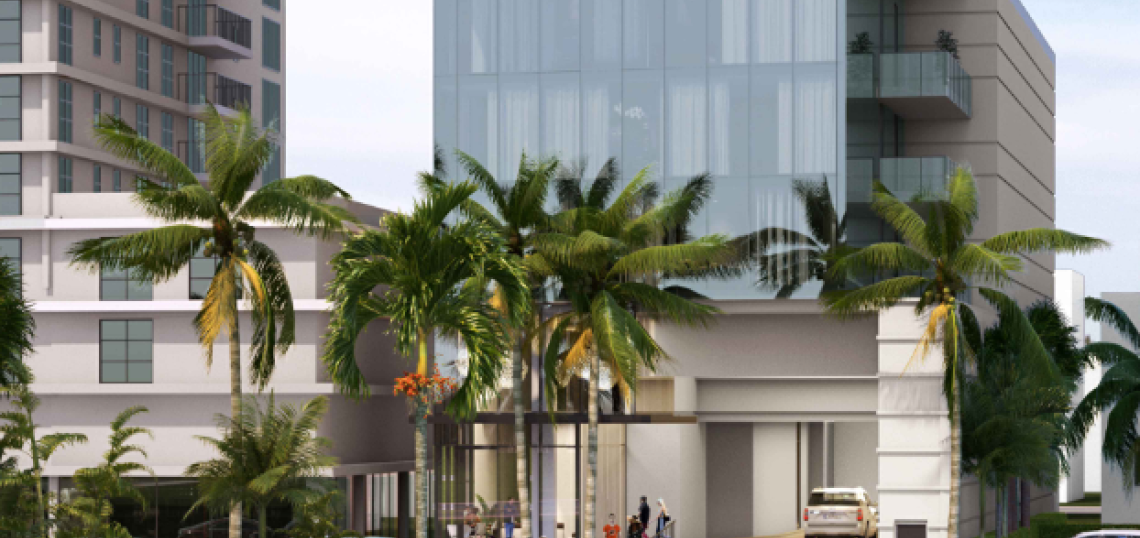
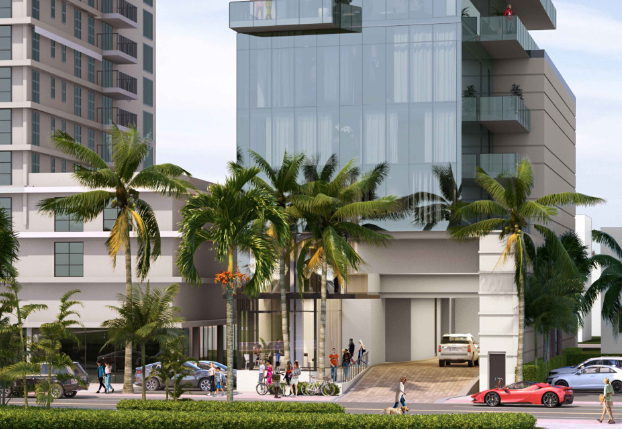 Proposed Live Local project at 1826 Collins Avenue, Miami Beach, FL by Built Form ArchitectureBuilt Form Architecture
Among the most significant changes, Live Local would now apply to certain publicly owned land and qualifying religious institutional properties, regardless of underlying zoning, provided specific criteria are met. This opens the door for new development partnerships and expands the number of viable sites across the state.
The legislation also closes a loophole that had been used by some municipalities to limit project scale by prohibiting the use of setbacks, step-backs, or other dimensional requirements to effectively reduce allowable building height for Live Local projects.
Other updates clarify that Live Local projects may include assemblages of parcels separated by limited public access and permit development in certain airport-impacted areas with approvals.
Many Live Local projects stalled in the early years following the law’s passage due to ambiguity in the statute and resistance at the municipal level. More recently, however, activity has accelerated, with tens of thousands of residential units now proposed or under consideration statewide, a significant share of which are located in South Florida.
Recent high-profile projects illustrate the law’s growing impact. In Miami-Dade County, developers have advanced large-scale proposals such as The HueHub in West Little River, a multi-tower development planned to include over 4,000 residential units. In Allapattah, projects such as Anatomia have received approvals for high-rise residential buildings incorporating significant workforce housing components.
In Broward County, developers have increasingly explored Live Local for the redevelopment of aging commercial corridors, while in Palm Beach County, municipalities such as Boynton Beach have approved projects including The Dune developments, which combine residential and commercial uses.
At the same time, the law is being actively tested in the courts. In Broward County, a recent ruling sided with the City of Hollywood in a dispute over a proposed Live Local project, though the developer has indicated plans to appeal. In Miami-Dade County, the Florida Attorney General has intervened in support of a Live Local application tied to the proposed redevelopment of Bal Harbour Shops, signaling the state’s willingness to defend the law’s preemption authority.
As these legal challenges continue to play out, the Live Local Act remains one of the most consequential housing policies in Florida. The 2026 amendments are expected to further accelerate development activity, particularly in South Florida, where demand for housing remains strong and redevelopment opportunities continue to expand.